Posts Tagged ‘External Sources’

Atmosphere is enough: Why Flower succeeded where Limbo failed

Posted in External Sources, Recent Posts on January 27th, 2012 by Eric Swain – Be the first to comment

This was a piece that spawned from the end of last year’s debate on Limbo. I figured I might try to be more positive and provide an example that actual does the atmospheric storytelling well instead of ragging on Limbo all the time. I really did want to like that game. If only it wasn’t avant-garde just to catch attention and could follow through.  After a little time thinking of a few titles, I figured Flower was the best one to make my point. That and I’ve been wanting to write about it like a proper critic ever since I played it almost three years ago now.

In a way I can see that as my growth as a critic. I may be a little off, but at least I think I’m ready to tackle it. Of course it still took more than two weeks to actually get it from first draft to published. I was ready to publish it when I realized I should expand upon the individual levels and the base thematic meaning they are trying to convey. I only did the first two originally as examples. Of course I couldn’t quite remember details of the later levels as well so I had to go back to the text. Still a great game.

Of course most of it worked and I inserted the thematic details in, but oh wow does that last level tear my argument apart. My main argument that Flower is a good example of a game whose story is told via atmosphere and ambiance still holds strong, but major parts of my reading start to crumble in the face of the sixth flower. In fact I started to go on too long about it and had to cut it for the original piece. But now, after the image I will get to it, because the last two levels deserves a close reading all on its own.

In looking over the last level I was astonished to find how much surrealistic imagery manifests throughout the dream city. While all the other levels had a magical quality to them and each had their own rules they played by, the small white flower seems to go the extra mile.

It begins by not looking out at the city and we are thrust into the level directly. A petal floats to a space surrounded by the menacing rusted electrical towers. The petal grows a flower and upon the player pressing a button, the flower purifies the constructions out of existence. The field is brought back to life and the sky lightens. Following the level we destroy barriers of web shaped iron bars and purify more bent constructions returning life and color to the city. It’s not just nature either. Once within the city walls in the first field upon clearing certain areas it is a three story building and some streetlights that grow out of the ground instead. They don’t rise out either, but twist out like an enormous vine. Later we travel along a highway road flinging roadblocks and collecting flower petals and the road has color return to it as the same speed was travel on it. The player restores an industrial fan and uses to fly high from building top to building top, collecting flower petals and returning color to the skyscrapers.

Each of these purifications have the constructions burst apart, slow in mid air and turn pure white before vanishing. There is no violence to the moment. It happens when the petal train merely touches one of the constructions or brushes past and it is accompanies by the sound of a call of a heavenly choir singing a single note. We are removing an abberation, but not because it is man made. Some of these things are hindering the growth and life of the city itself. They dull the city, constrain the buildings and create a dark atmosphere. The constructions themselves look like parasites in the environment. They attach themselves to buildings and grow from the nooks and crannies to strangle the life out of them. In the entering the final corridor of buildings, additional ones grow from the slates in the buildings to try and halt your way. Once they are all purified, color and light return to the areas they once occupied.

The flower petal comes and clears it away. It purifies it and brings life to both nature and the world of man. In the final part of the level a ominous tower seemingly built from the these things looms overhead and on your approach spires grow in batches to try and halt your progress. You blast your way through them and begin you assent through in the inner workings of the tower. Three times the flower petal blasts its way through a spiderweb barrier. More and more spires try to block your way and you sail through their efforts, purifying them out of existence until you soar out of the top. The camera pulls out and you see a single point of light hanging in the sky; the trails of flower petals heading up and up towards it. Then the camera zooms in and we see that point of light is a window with a empty flower pot hovering over the sill and the chair from the menu at and askew angle. The window is hanging in the night sky showing a bright sunny day in the city it looks out on to. The flower petals, like they did in all the previous levels, streaming into a single point, in this case the flower pot, and grow a single flower as if all the collected life energy from all the other flowers collected into a single point gives life to a new flower.

It doesn’t end there as the tower is bathed in light. All the spires and constructions turn white and the screen whites out. In the tower’s place we see a large sakura tree in full bloom, an eastern symbol of spring and new life and beginnings. The tree is so massive that it towers over the rest of the city, taller than any of the skyscrapers. It does’t blooms so much as collect the massive amounts of petal that float towards it and collects them on its branches. It is a cloud of pink to hang over the city.

Here we see the full thematic argument of the entire game made plain. All the other dreams were mere pieces building up to the whole. Wish fulfillment of the flowers whose lives are missing something. In the youngest flower we see an idealism and hope for co-existence between the two worlds. It manifests the conflict between them as the iron constructs and the spires that stand in the way of growth and life for both nature and the city. In a way there is a Jesus motif for the light pink flower. Through it all things may be redeemed and it is the bringer of light. Peace reigns once he reaches towards the heavens and bathes the world in light, ending on an eastern symbol of peace and tranquility. In fact we get both an Eastern and Western mythology of peace and spirituality in the final level. The harmony between nature and man and then focus of the light through all things are brought to peace.

Both the level’s beginning and ending sort of throw my initial reading of the game out the window in my Nightmare Mode post. It is the climax of the game, but it isn’t independent of the other levels. It picks up right were the previous dreams leaves off and ends in a far more grandiose and surreal fashion that any of the previous levels. It isn’t about the internal peace of the individual, but about the peace that can be achieved for all through societal harmony. It also emphasizes the dream of the flower being beyond what it can personally attain by wanting it to bring this dream into the real world. It dreams of its place on the windowsill and from there seeing the sakura tree, based in the dream world stretching high to the window in the sky.

The final level of the game is another anomaly, but for a very different reason. It isn’t the dream of a flower, but a world within a painting of a flower. Here we have a playable denouement. Each flower releases a name of the credits hovering over the flower before the letters float up into the sky. We traverse new terrain that uses elements of the previous levels: the moving canyon walls, the lighting up of haystacks, the industrial power cable tower, the windmills etc. They are mixed and matched into a world where nature and man made constructions are existing in harmony. But more than that, the level is an artistic signature in the painting. Instead of having the credits roll at the end like movie, it integrates them into the form of the medium. It makes them apart of the game. To see the credits you must pursue the flowers and have them bloom. Then at the end, the flower train flies into the night sky as the names are collected in more traditional scrolling fashion and fly into the night sky. We have sent them to the heavens above and so concludes the game.

I don’t know what this ending level means, but I feel it appropriate with the rest of the game. Few games integrate their credits into the game dynamics and make them playable. Instead most use them as a reward for completing the game. This method is much more satisfying. I’m glad they did it in a way that feels thematically relevant. I don’t know how, but at least it is aesthetically consistent with the tone and design of the rest of the work.

The Intersection of Mechanics and Aesthetics in ‘Driver: San Francisco’

Posted in External Sources, Recent Posts on January 24th, 2012 by Eric Swain – Be the first to comment

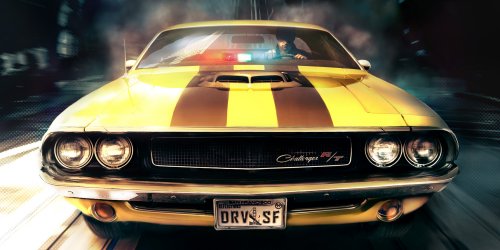
My second post on Driver: San Francisco is up on PopMatters. I’m surprised the title made it through at all. Hell I’m surprised I wasn’t told to write something else. I mentioned on twitter I was playing fast and loose with terminology and was told that is how you know you made it.

This piece spawned from the simple thought of how the game got around the problem of breaking my immersion by taking innocent civilians in their cars and smashing them into on coming traffic. As Yahtzee put it “Protect and Serve ladies and gentlemen.” The rest came out of how to fame this thought and how to stretch it out into an 1000 – 1200 word post. Out of that came the bizarre post of conceptualizing the process of the game’s dynamics in the player’s mental state during play. I had no idea where it was going until I had arrived which I think is how most good theory work is written. That and written right before the deadline.

In all seriousness, go check out the piece and then find a copy of the game and play it. I am really pushing this as an overlooked gem of 2011.

Episode 9 of the CDC Podcast

Posted in External Sources, Recent Posts on January 23rd, 2012 by Eric Swain – Be the first to comment

Yeah so another podcast episode came out this week. I know, there must be something in the water. Well it’s the missing episode 9 that was recorded back in August in an attempt to release it for the third anniversary of Braid’s release on the XBLA. Rather foolish as I spent three weeks trying to get a panel together and ended up doing an open call for people on twitter 10 minutes before recording. I may just do all future Critical Compilation Companions like that. Anyone who would respond would have strong feelings about the game. I asked for two who loved it and two who hated the game. I think it turned out all right. Despite this method being rather slap dash the weak link of the whole thing was yours truly. During editing any time I was speaking I just wanted me to shut the hell up. I could tell where I was going and in my head formulate the proper argument, but that seems to go out the window once I open my mouth. Good thing I’m the moderator and don’t have to speak much.

So, Episode 9 – A Braid Companion is up on Critical Distance. The next episode is in post production and the one after that is in the planning stages. Who knows? Maybe I’ll be more regular with these things.

Note: It’s on iTunes and iTunes still can’t put these things in any order. They are numbered Apple or Apple automated program.

It’s all in the presentation: Why I let Driver: San Francisco get away with poor driving

Posted in External Sources, Recent Posts on January 12th, 2012 by Eric Swain – Be the first to comment

And because I submitted my PopMatters post a bit late for a Tuesday release it got pushed back to Thursday, so I ended up giving everyone a double dose of Driver: San Francisco love. My Nightmare Mode post though focuses more on the ongoing narrative I seem to be building about racing/driving games across my posts.

I realize how damn lucky I got that the first driving game I tried was Burnout: Paradise with all junk I’ve been going through since. Thankfully after about a half dozen games (only some of which I’ve written about) I finally found another great racing game. The reason I love this game so much is because of the depth I find to it, not only in its narrative and story, but also its formalism and in this post as I discuss, its aesthetics. It’s fun without only being about the enjoyment of what you are doing while you are doing it. It is a game with a personality. Personality goes a long way.

If nothing else, this piece made me do some research on 1970s and 1980s cop show. Some of the shows I thought of as with a 70s style are actually from the 1980s. Maybe its because broadcast TV is slightly behind trends or something. Though when I found some clips of Starsky and Hutch I found what Driver was aping.

Fun fact. I came up with the title this time and everyone liked it. I’ve been off lately in titles, but I can come up with a good one now and then. Oh and I’m just going to quote one editor suggestion because it deserves it. It was a potential example on how to expand one section of the piece.

EXAMPLE* I’m going to go with the one that lets me skid through a corner and fruit stand, jamming back on the accelerator to awkwardly line up previously mentioned car transporter, hitting it at a bad angle, and 50 feet, 3 barrel rolls and a crowd of frantic pedestrians later, landing on my opponent, whipping off my shades and saying “You should be careful to not let things…..get on top of you…

So, yeah, after that cringe worthy moment, head on over to Nightmare Mode and read more on Driver: San Francisco.

Magical Realism as a Game Mechanic in ‘Driver: San Francisco’

Posted in External Sources, Recent Posts on January 12th, 2012 by Eric Swain – Be the first to comment

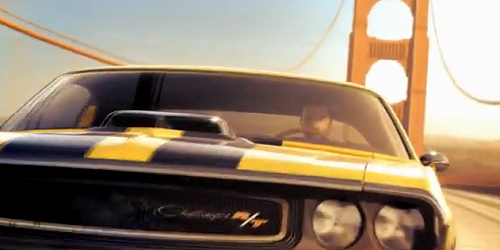
My second post is up at PopMatters, this time looking at an actual game. Thanks to the scheduling of the hiatus on the Moving Pixels Blog at the end of last year meant that my second post would be pushed back to the new year. Driver: San Francisco is a game that is so much better than its advertising gives it any right to be. This is another case of the developers and PR not knowing how to sell their own game. Driver: San Francisco is a slow burn of a game. It sounds like a stupid premise with maybe the best it can reach for stupid fun. But it isn’t. It is a very thoughtful and reasoned game. For crying out loud this is a game where the police actually perform police work. The premise is ludicrous, but it’s how the game uses it.

This was a post I struggled to write mainly because I started writing a completely different post on the game and ended up write one draft that had three posts within it. Of course they weren’t one after another, they were woven into each other. Every other paragraph belonged to a different post and then it became every other sentence and then I topped it off with parts of what ended up in the PopMatters piece. I’ll be fitting the rest of the content into different posts at some point.

I was worried that it wouldn’t come out to well with me hammering on certain points too much or maybe repeating myself in the text. But seeing it live I can say that I don’t think all my worrying was warranted. It flows well and I have to thank G. Christopher Williams for the new title. That has been a real thing for me lately hasn’t it?

So, take a look at what I think magical realism does to the undercurrent meanings of Driver: San Francisco.

Critical Distance End of Year Spetacular

Posted in External Sources, Recent Posts on January 2nd, 2012 by Eric Swain – 1 Comment

The last month have been a very special sort of self-inflicted hell. For some unearthly reason I think last year was so much easier to get everything done. On a whim last year I decided to revive the CDC podcast with an end of year retrospective and pull off the first ever This Year In Video Game Blogging without telling anybody. Both ended up being stealth projects that took a lot of people by surprised, none more so than my editor in chief at the time Ben Abraham. Was I going to make it an annual thing? Well I don’t remember, but it hardly matters because I did it anyway.

I started getting ready near the beginning of December to make things easier on myself, to spread out the work and so forth. I don’t know what happened, but at the end of the month I ended up with strained eyeballs and a desperate dive for the finish line and actually did worse. Last year’s post didn’t need as much editing as this years all mainly because my brain, fingers and eyes were not on the same page half the time. The podcast editing ended up taking the same amount of time as last year even though I dedicated not to go to the same extreme lengths of editing and cleaning up as I did before. I cringe in certain parts at things I could have fixed has I gone for it. But of course being my sophomoric effort and the end of year projects they somehow got so much bigger. From 4 hours of audio to edit into a 3 and a half hour podcast to 6 hours of audio to edit into a 5 hour podcast. From typing up a round up of 60 links I typed up a round up of 79 links.

Scheduling the podcast recording session for two days before Christmas wasn’t the brightest idea on my part, especially since it was the day before Christmas for those of our friends across the International Dateline. But it was literally the only time I could get everyone to show up. I knew I was lucky last year asking Ben, Kirk and Denis out of the blue if they’d be free in a handful of days to record a podcast. I suppose it was a bit much to ask everyone who worked at Critical-Distance to come on. It was six people, one beyond the limit of what I think is a controllable conversation. Though it was fun finally getting to talk to Kris and Katie, come back soon ladies. Also, I like to have fun with the podcast titles and I channeled my inner brony for this one.

Though who knows, with these relaxed standards I might be able to do a podcast more frequently. What a concept!

As much as a slog as it was to get through the podcast, the real challenge is TYIVGB. It’s like TWIVGB except on an order of magnitude the likes of which you haven’t seen before. With TWIVGB you generally have between 20 and 35 links to curate and nearly all of them get in. Depending on that week’s editor your mileage may vary. With TYIVGB I have 937 links pre reader suggestions to cull (much more apt a word) through. Thank Inspector Space-Time that I wasn’t doing this stealth like and had an editorial staff willing to help me. I first went through all the TWIVGBs myself and culled the list down to around 300 potential links. Then I split them up and shipped off a piece each to a different editor. After Christmas Ian, Kris, Ben and myself got on Skype and we worked through all the yes’s to cut them down as well. Ben cut out all the No’s at the very beginning of the process so we could get through them faster. After we finished culling all the yes’s he had to go and I pulled up the deleted no’s and pulled out links I thought deserved a second look. I saved quite a few links that did end up in the final copy. Just goes to show how subjective the whole process is, especially when you only have a partial list. Also, thank you to those of you who submitted suggestions. I only asked for a line or two explaining why you thought a particular pieces was the best from the year, some of you did that, but some of you wrote essays. Good lord.

By the 4th culling process we still had near 100 links, so we went down the list again chipping away at things that we didn’t need. We cut off the fat where ever we could. We were looking for posts that could fill requirements of showcases authors, subjects, games, theories, discussions, but mostly for pieces that could pull double and triple duty. For every link we got to keep there were at least 1 it pained somebody to cut. I don’t know what it was about this year but last year’s TYIVGB was 60 links out of 995 and this year it was 79 out of 937. Kris and I came up with a few theories for this. Don’t know how right any of them might be. The next day I was ordering up all the links into a working outline so it would all flow nicely. After I got everything sorted into the big categories I had to bring in Kris because I need an editor to challenge me if I’m being an idiot. It took us 40 minutes to get everything nicely order. I have no idea how long it would have taken by myself. Probably all evening. We chopped out a few more links during this process.

I could go into detail over some of the stories we had during this process. Or how our views were vastly different. Or gush over the reception (which I think I’ll do anyway, thank you all for your kind words and excitement.) Haven’t seen anyone take issue with it this year, I’d like to think that’s because I was more open about the process and those of you following me on twitter saw the anguish I was putting myself through. Even yesterday’s tweets alone could stand as an example at that was only about the writing process. Anyway, back to what I was saying. I could go on into detail, but instead I want to use this post to highlight some personal favorites that got cut for one reason or another. Mostly because I was aiming for last year’s 60 and couldn’t even do that. So here we go:

This three-part creative writing piece in the style of Hunter S. Thompson tracking down Ash in the world of Pokemon is an absolute scream for me. I haven’t read a whole lot of Thompson, but there is just something about the Gonzo style journalism I find spellbinding. The fact it also reveals what an ugly world this would be if it did exist is a bonus. Of course we don’t have the space for such a piece on a game that wasn’t talked about much and while a lot of fun didn’t say much critically that we haven’t heard a dozen times before.

This is another Bitmob piece that shouldn’t surprise anyone that I like it. It had me at gothic horror. No one else seemed as tickled with it as I was and ultimately it didn’t cover any representation ground, but it is still a good piece that brings up some neat ideas. Neat ideas are great for a weekly inclusion, but not a yearly one. That became a thing, we started calling things week (with an E) pieces as in they are good for the week, but not for the year. Nothing we had was a weak (with an A) piece.

This Character Done Right  at the Border House struck a cord with me. Though it’s about a game I haven’t played that is several years old now, just seeing such and in depth analysis of a character that doesn’t fit the normal Star Wars mold is enough to make one stop and take notice. It was also written by Quinnae, which we unfortunately couldn’t find a worthy year end piece by here. She does good work.

Eric Swartz was a writer we wanted to highlight very much. Not only was he very prolific this year, but he is an excellent long form theorist. He wrote some of the best essays on UI design and structural design of the year. So this piece was in there for quite a while, but had almost nothing to do with the rest of his body of work. It was in there as a place holder because we couldn’t find the bloody link for the essay of his that to me was a shoe in. It took a few hours, but the right essay of his finally got put in. Also, this piece focused on the Smithsonian exhibit that while that got some attention it wasn’t a whole lot.

This next one was a user suggested piece that I hadn’t read before. It is a powerful piece about real Afghanistan and Iraq vets using video games to help combat PTSD. To me it didn’t say much about something in video games from this year like the author’s Call of Juarez piece which got included, but it needs attention so I’m showing it off here.

Last year we had a section dedicated to Print Criticism and Video Essays. While there were books, there wasn’t a Extra Lives nor was it Kill Screen’s inaugural year. You should be picking up the issues to the magazine however. And there weren’t enough video essays to justify having a section all to themselves. So I went through the big essayists to see which of their works was worth highlighting. Extra Credits got three great videos in, but here are two I wished I had space to go in. Deus Ex: Human Revolution and Art is not the Opposite of Fun. I feel that latter one, especially, needs to be linked again.

Ok, this one caused some real contention among editors, by which I mean Kris and myself. I really liked it as a think piece of who we become in video games even those where you can play as anyone you want. Kris saw a lot of problems with it that I didn’t get. In rereading it I find some of her issues with it valid and others unsubstantiated. I will admit I really liked it when it came out, but the shine had worn off over the year. It’s still a great piece just not yearly material.

This is another Kirk Hamilton piece that actually was the excuse for other pieces getting cut because they were too similar and this one did it best. In the end the satire of treating a work in another medium like it was a video game while entertaining doesn’t merit inclusion all by itself. We love satire and we included satire, but we didn’t need it. Plus we were going to sound like Kirk Hamilton fanboys after a while.

The Brindle Brothers are excellent writers new to the scene of video game criticism and we wanted to highlight their efforts. We had this and their Red Dead Redemption piece in the list until we started our final cuttings. I eventually determined that their RDR was just better and we had other pieces looking at first person shooters covering not exactly the same territory, but close enough. You can’t always get what you want.

This Frictional Games blog post really hurt us all to cut. We were making excuses and shuffling things around trying to find a way to keep it in after every culling round. Every single editor liked this piece. It quote Poe’s Fall of the House of Usher and Battleship Potemkin within a paragraph, how could you not like it? Eventually I had bring the ax down myself. It’s a great piece of writing in looking at video game formalism by developers who know how to tell a story in games, but it was indulgent of us. We knew the writing was on the wall for this piece (no pun intended). It wasn’t part of the conversation and it tragically wasn’t remembered on its own merit either. But I’m showing it off now, because dammit this is my blog.

I feel like I have to apologize to Matthew Burns for not including this piece, because its just so good. But ultimately it felt like something from last year and was following up on a conversation from 2010. It’s one of those January pieces that got lost in the transition. A few of us were wary since it seems to go into games as art territory. It was also a reader suggestion, so consider this my penance for that and allow me to show it off here.

Finally, this was another pieces that was painful to cut. In fact it has the distinction of being the very last piece of writing we cut. It made it all the way up to setting up the outline. It is a superb piece. One of the best written of the year about the second men of Final Fantasy. So, why did we cut it in the end? Because criticism doesn’t exist in a vacuum. By itself it’s a wonderful and would have gone in no question, but it was surrounded by Kirk and Leigh’s letter series, and by Tom Bissell’s essays and the writing people did on more relevant games and subjects. Against all that it just didn’t stack up and stood out as a bump in the flow. It sounds like I’m down on it, but really it is so good. It made the weekly roundup and would have made a month round up without a problem or a quarterly one without breaking a sweat, but you have to have higher standards when curating for a year round-up.

I hope people take this in the way it was intended as an extras list for pieces that didn’t quite make it. They deserve your attention, but they were the last tiny pieces of fat that got chopped off on the cutting board. The same thing happened last year, where for many different reason I had to leave off writing I personally loved. Critical-Distance could not create any sort of objective list of best criticism of the year, but we can damn well try. Pieces I like got left out and some pieces I didn’t particularly care for got in, because I can appreciate things beyond my tastes and understand their importance and/or quality. Our preferences will come into play no doubt, but we also have to be willing to put them aside for the work we are doing.

I hope you enjoyed the podcast and TYIVGB and if you haven’t got around to them yet, what are you waiting for?

Let me play: 7 issues with racing games

Posted in External Sources, Recent Posts on December 16th, 2011 by Eric Swain – 3 Comments

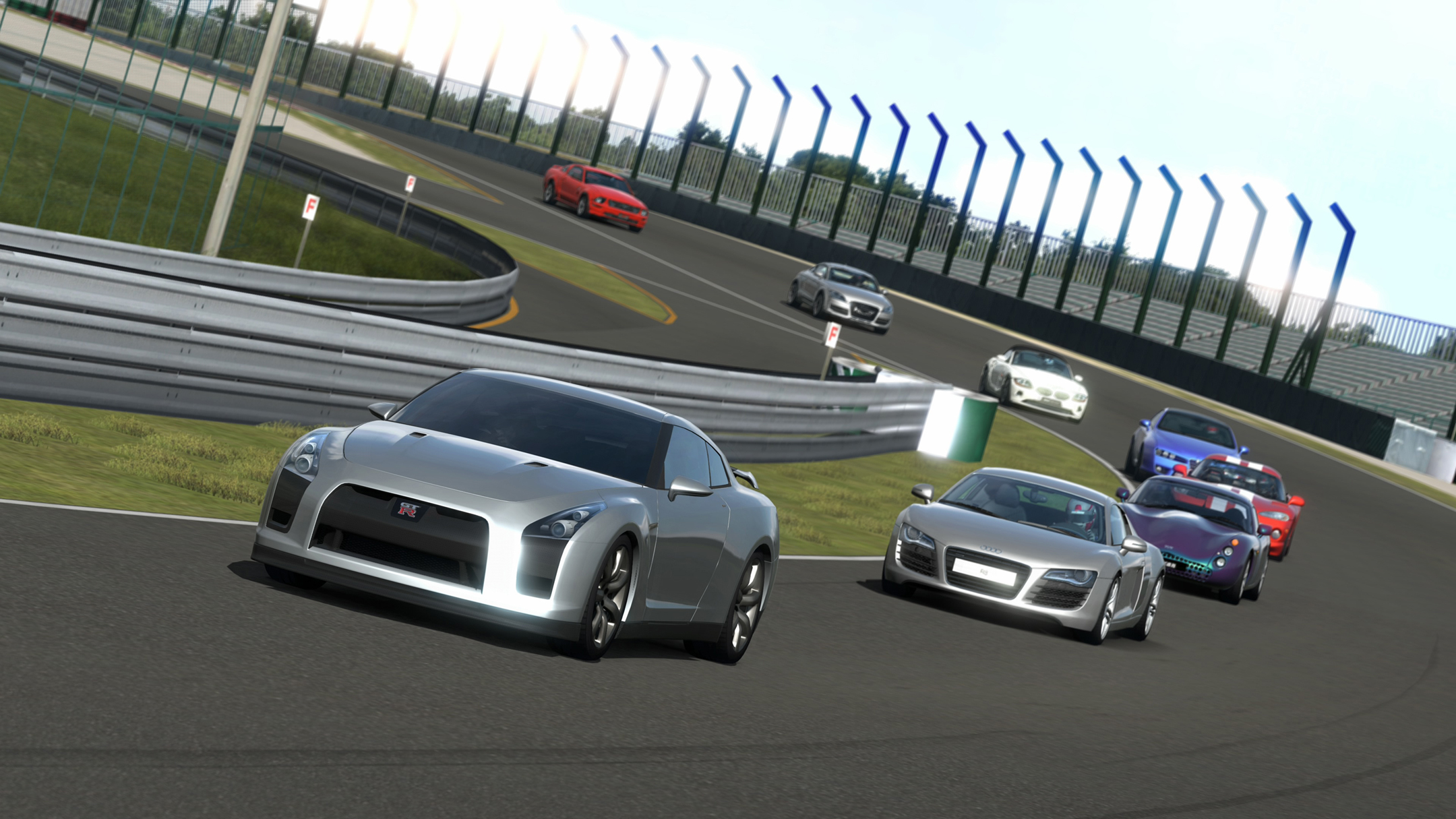
My weekly post is up at Nightmare Mode and only one day late this time. Here I go on about Gran Turismo 5 and Need for Speed: Shift. Neither game really grabbed me, in fact in the beginning they seem to do all they could to repel me. I understand both games are hardcore driving sims. Though I thought Need for Speed was a bit more arcadey. I just happened to pick up the only sim in the franchise. read more »

Miscellaneous

Posted in External Sources, Recent Posts on December 16th, 2011 by Eric Swain – Be the first to comment

Lots of minor things to get through, yet not much to say. Really just a bunch of little things happened my way. read more »

Desert Bus: The Cultural Event/Game

Posted in External Sources, Recent Posts on December 6th, 2011 by Eric Swain – Be the first to comment

So a lot of good things have been happening to me as of late and here’s another one. I’ve been invited to write for the Moving Pixels blog over at PopMatters. My first article has been published today and as per usual when I’m writing for a new site I am super nervous. PopMatters is another huge step and I can’t thank G. Christopher Williams enough for giving me this opportunity. (Strange thing, he’d been wanting to talk to me for weeks, but since he doesn’t have Twitter and I don’t have Facebook it wasn’t until a random time on Skype did it happen.) read more »

Motorstorm: Apocalypse, the game that wasn’t there

Posted in External Sources, Recent Posts on November 24th, 2011 by Eric Swain – Be the first to comment

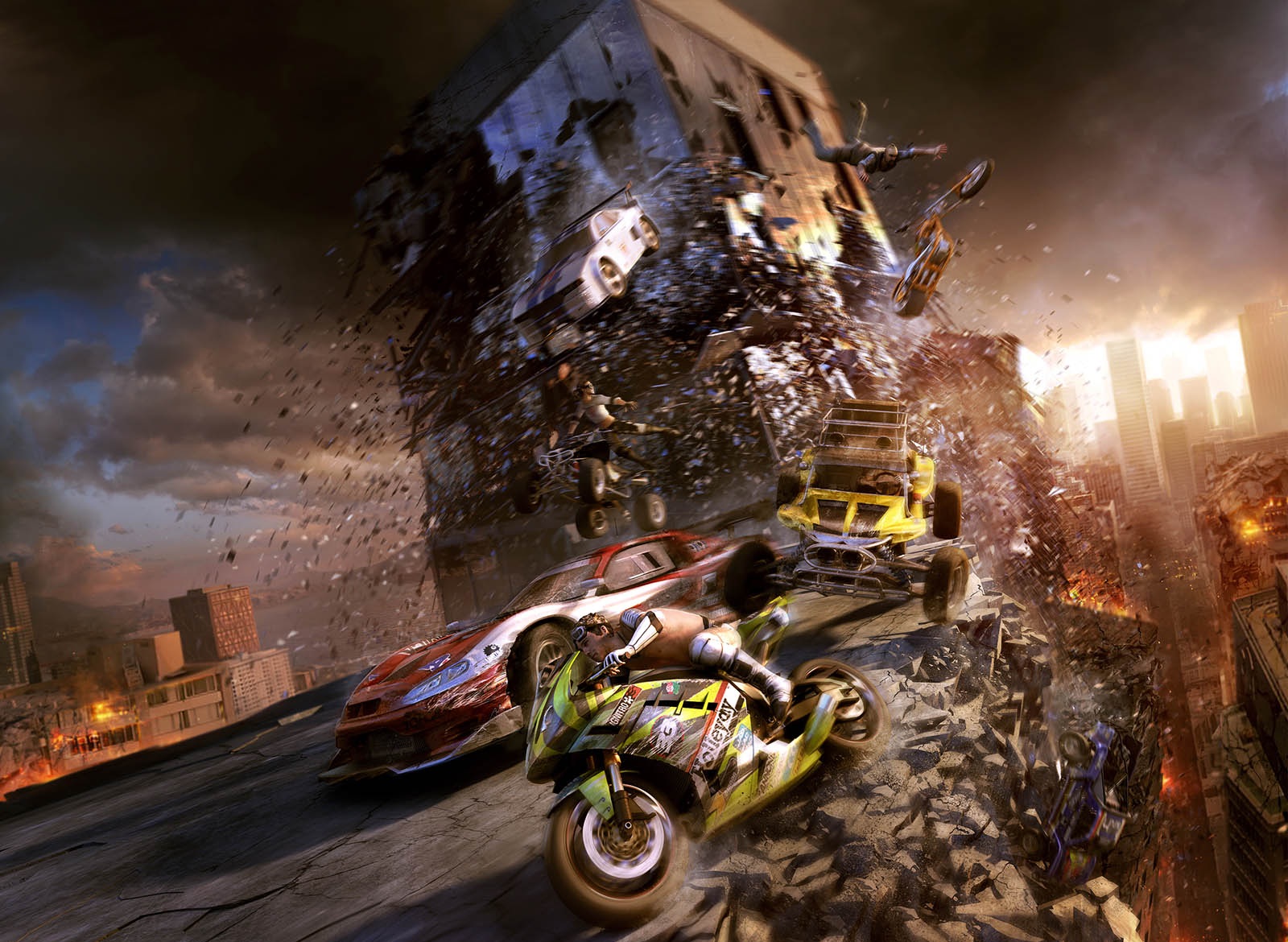
This is one of those posts that felt like pulling teeth. It just didn’t want to come out. Then again it’s a post about how the game offered nothing to talk about, so that is understandable. I say in the first sentence that this was my fourth attempt at writing this piece, but with the editing and major corrections it went through it’s probably even higher. It should have come out a week or two ago, but it kept getting pushed back because I didn’t know what to do with it and the editorial team was equally stumped. read more »